China Best Waste And Recycling Equipment Suppliers
China has become a major sourcing base for Waste And Recycling equipment, serving municipal, commercial, and industrial projects worldwide. The market is expanding under clear pressure. The World Bank’s What a Waste 2.0 report estimated 2.01 billion tonnes of municipal solid waste in 2016. It projected this figure could reach 3.40 billion tonnes by 2050. UNEP’s Global Waste Management Outlook 2024 also warns that global municipal waste may rise from 2.3 billion tonnes annually to nearly 3.8 billion tonnes by 2050.
These figures make equipment quality more important than attractive pricing alone. A reliable Chinese supplier should provide practical solutions, including conveyors, balers, shredders, screens, magnetic separators, and optical sorting systems. Site conditions matter. Moisture, contamination, material density, and daily throughput can change equipment performance significantly. One machine may operate well in a dry recycling plant but struggle with wet mixed waste.
The Global E-waste Monitor 2024 reported 62 million tonnes of electronic waste generated in 2022. This highlights the need for safer dismantling, sorting, and recovery equipment. Buyers should examine factory experience, test records, certifications, spare-parts availability, installation support, and after-sales response. A brochure is not proof. Video tests help, but independent verification is stronger.
No supplier is perfect. Some manufacturers may offer excellent fabrication but weaker documentation or commissioning support. Others may provide advanced automation at a higher operating cost. This guide evaluates China’s best Waste And Recycling equipment suppliers through measurable capabilities, application experience, and long-term reliability. The final choice should reflect the actual waste stream, not only the lowest quotation.
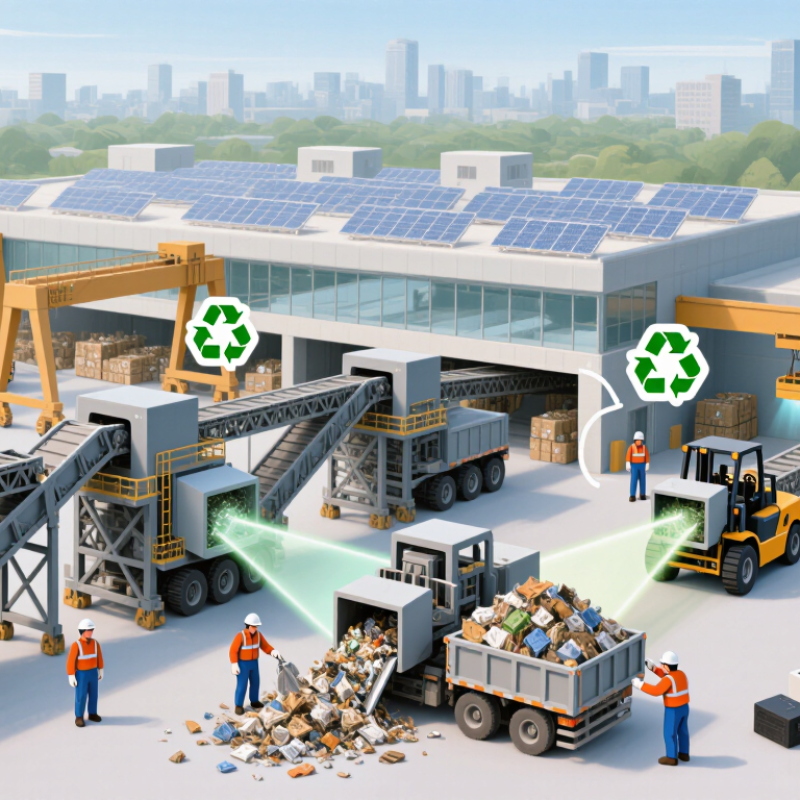
Global Waste Equipment Demand: 2.24 Billion Tonnes of Municipal Waste
China Best Waste And Recycling Equipment Suppliers
Global municipal waste generation is estimated at about 2.24 billion tonnes each year. This figure represents discarded food, packaging, paper, textiles, and household materials. It is not merely a market statistic. It describes thousands of collection trucks arriving at transfer stations daily, often carrying mixed and wet loads.
Equipment suppliers must respond to difficult operating conditions.
A sorting line handling damp food waste needs different screening performance from a facility processing dry packaging. Practical buyers should examine throughput, moisture tolerance, energy use, maintenance access, and spare-part availability. A machine rated for 30 tonnes per hour may perform far below that level when waste composition changes. Real conditions matter.
Field experience is valuable here.
Operators should request test results using local waste samples, not only laboratory figures. They should also inspect safety controls, noise levels, dust management, and operator training systems. Small details matter. A blocked conveyor can stop an entire facility.
The industry still has room for reflection.
More equipment does not automatically create better recycling outcomes. Poor source separation, limited staff training, and weak maintenance can reduce recovery rates. Suppliers that provide clear technical documents, transparent performance limits, and responsive service offer stronger long-term value. Buyers should question optimistic promises and compare total ownership costs over several years. Reliable equipment is not always the most complex option.
China’s Supplier Landscape Across Collection, Sorting, and Material Recovery
China’s waste and recycling equipment suppliers now cover the full material recovery chain. Collection solutions include compactors, transfer stations, enclosed containers, and food-waste handling systems. Sorting suppliers offer trommel screens, ballistic separators, optical units, magnets, and air classifiers. Recovery equipment goes further, with washing, shredding, dewatering, and pelletizing lines.
The scale is substantial.
The World Bank’s What a Waste 2.0 estimated 2.01 billion tonnes of municipal solid waste were generated globally in 2016. That figure could reach 3.40 billion tonnes by 2050. UNEP’s Global Waste Management Outlook 2024 reports about 2.3 billion tonnes in 2023. China-based suppliers respond with modular plants for mixed waste, plastics, construction debris, and organics. Site trials matter. Moisture, dust, contamination, and local collection habits can change performance sharply.
Data quality remains a weak point.
The Global E-waste Monitor 2024 recorded 62 million tonnes of e-waste in 2022, yet only 22.3% was formally collected and recycled. That gap shows why recovery systems need more than high-speed conveyors. Suppliers should provide measured throughput, purity rates, energy use, wear-part costs, and maintenance records. A glossy catalogue is not enough. Some projects still overestimate sorting accuracy. Independent testing and several weeks of operating data can reveal the uncomfortable details.
Supplier Evaluation Using 65% Recycling and 10% Landfill Benchmarks
Choosing China’s best waste and recycling equipment suppliers requires more than comparing catalog prices. The 65% recycling benchmark should guide the evaluation, not decorate it. Ask suppliers for tested recovery rates, material assumptions, and operating conditions. A machine processing mixed packaging may perform differently from one handling clean metal. Request site records, maintenance logs, and sample test results.
The 10% landfill benchmark adds a necessary reality check. Measure rejected material by weight, not by container volume. During a plant visit, inspect conveyor residue, moisture control, sorting accuracy, and dust management. A reliable supplier should explain where the remaining waste goes. They should also provide calibration procedures and staff training. These details reveal practical experience.
Our early evaluations focused too heavily on throughput. That was a mistake. High speed can hide poor separation and excessive residue. A stronger scorecard combines recycling performance, landfill diversion, energy use, downtime, spare-part access, and worker safety. Suppliers should accept independent testing before final approval. Results should be recorded across several production shifts, including wet and contaminated loads. The 65% and 10% figures are useful targets, but they are not universal guarantees. Local waste composition can change the outcome. Ask difficult questions. Keep the evidence.
China Supplier Selection: Certifications, Capacity, Technology, and Export Data
When selecting China’s waste and recycling equipment suppliers, verify more than certificates on a website. I check ISO 9001 records, applicable CE documentation, electrical safety reports, and factory quality procedures. Certificates alone are not enough. Ask for certificate numbers, issuing bodies, and recent inspection dates.
Capacity should match your actual material and daily volume. Request production data for sorting lines, shredders, balers, or compactors under comparable conditions. A factory may claim 20 tons per hour, but wet waste can reduce output sharply. Ask for a recorded test using similar moisture, contamination, and particle size. Inspect welding points, conveyor frames, control cabinets, and spare-part storage. Small details matter.
Technology needs practical proof, not attractive drawings. Review motor efficiency, sensor accuracy, dust control, noise levels, and maintenance access. Ask whether software supports remote diagnostics and clear fault codes. Export data can reveal real experience. Request anonymized shipping records, destination regions, installation dates, and customer references where permitted. Check whether the supplier has handled your voltage, container limits, and local documentation requirements.
I have seen promising machines fail because operators received weak training. That risk is often overlooked. A reliable supplier should provide manuals, commissioning support, inspection photos, and a response plan for breakdowns. One weakness remains: export records may be incomplete or difficult to verify. Treat them as evidence, not proof. A factory audit and witnessed performance test can expose gaps before payment.