How to Choose the Right Thermal Paper Supplier?
Choosing the right Paper Thermal supplier is no longer a simple price comparison. It affects print clarity, machine uptime, storage stability, and customer trust. A faded receipt can look small, yet it may reveal a weak coating, poor raw materials, or unsuitable storage advice.
Grand View Research reports that the global thermal paper market was valued at approximately USD 4.3 billion in 2023. Its report also projects continued growth through 2030, driven by retail, logistics, healthcare, and transportation applications. Smithers’ industry analysis highlights similar demand, while stressing performance, sustainability, and regulatory changes. These reports show opportunity, but market growth does not guarantee supplier quality. That assumption is tempting, but incomplete.
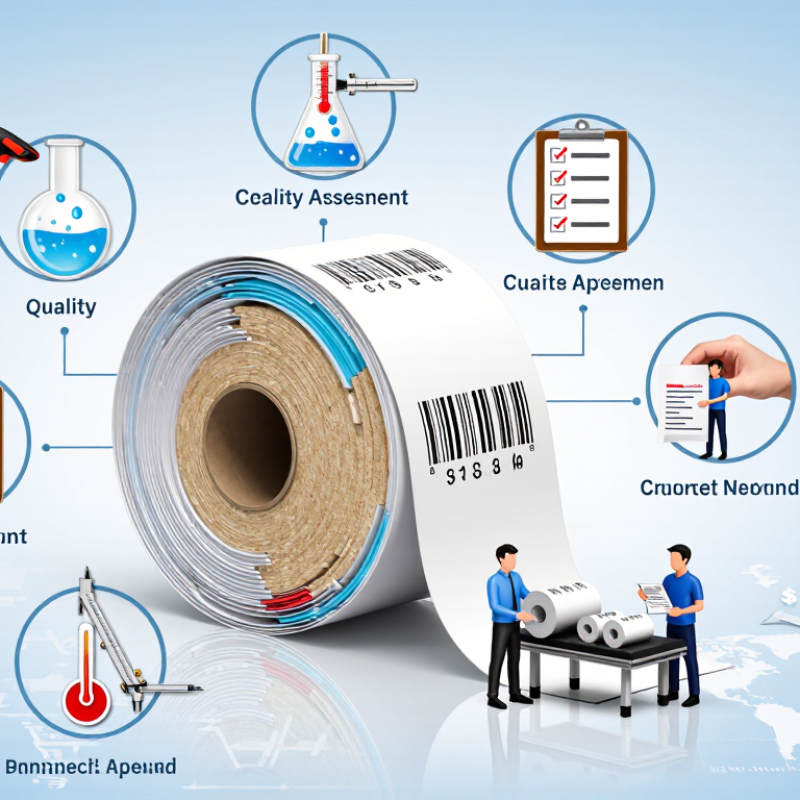
Paper Thermal specialist Dr. Elena Marquez states, “A reliable supplier protects print performance before the roll reaches the printer.” Buyers should test more than a sample image. Check basis weight, roll dimensions, coating sensitivity, barcode readability, adhesive compatibility, and resistance to heat and moisture. Ask for batch records and documented quality controls. Request samples from different production lots. One perfect roll proves very little.
Supplier experience also matters. A capable partner can recommend the right grade for a receipt printer, label applicator, or mobile terminal. It should explain storage conditions clearly. It should also respond when problems appear, not disappear after payment. Cost still matters, of course. However, the cheapest roll can become expensive through jams, reprints, rejected labels, and damaged customer experiences. The better choice is measurable, traceable, and honest about limitations.
Define Your Thermal Paper Requirements
Before comparing suppliers, define the job your thermal paper must perform. Record the printer model, roll width, core size, outside diameter, winding direction, and expected print life. A receipt used for two days needs different durability from a medical label stored for several years. Test readability after exposure to heat, moisture, friction, light, and plastic packaging. Small details matter.
Smithers’ industry analysis identifies retail, transport, logistics, and healthcare as major thermal-printing applications. These sectors demand different specifications.
Retail may prioritize smooth feeding and low dust.
Logistics often needs stronger surface protection and barcode contrast.
Healthcare requires stable images and traceable production records.
Ask suppliers for basis weight, caliper, coating structure, image density, and aging-test results. Request samples from several production lots, not one perfect roll.
Chemical requirements also deserve careful attention. The European Chemicals Agency restricts bisphenol A in thermal paper to 0.02% by weight. Confirm compliance documents for every intended market, and check whether alternatives affect image stability or recycling practices. A “BPA-free” claim is not enough. Ask what replaces it. Specify acceptable substitutes, migration data, and storage conditions. A neat specification can still miss real warehouse problems.
We once underestimated humidity. The paper looked fine in testing, then curled during summer delivery. Supplier selection should include packaging design, batch consistency, technical response time, and a written process for handling defects.
Evaluate Supplier Product Quality and Material Standards
How to Choose the Right Thermal Paper Supplier?
Evaluate Supplier Product Quality and Material Standards
A reliable supplier should explain the paper’s base material, coating structure, and thermal grade. Ask for specifications before requesting a price. Key details include grammage, thickness, roll dimensions, core size, and recommended storage conditions. The coating should produce clear, even images without excessive heat. Test several rolls in your actual printers. Laboratory samples can behave differently on a busy counter.
Material safety also deserves careful attention. Request current compliance documents, safety data, and independent test reports. Check whether the paper is phenol-free, if that matters for your application. Do not accept vague phrases such as “eco-friendly” without measurable evidence.
Confirm restricted-substance testing and applicable market requirements. A certificate alone is not enough. Verify its scope, date, and issuing laboratory.
Evaluate print darkness, smudge resistance, edge quality, curl, and image retention. Store sample rolls in warm and humid conditions, then compare them after several days. The result should remain readable and feed smoothly.
A supplier should offer batch traceability and explain how coating variations are controlled. Ask how complaints are investigated. Good answers include inspection records, corrective actions, and replacement procedures.
No checklist is perfect. I would still repeat testing after a material change, because small coating differences can affect scanners and printers.
A low price may hide unstable quality, wasted rolls, and service interruptions. Choose evidence over confident promises.
Check Production Capacity, Customization, and Delivery Reliability
Choosing the right thermal paper supplier requires more than comparing quoted prices. Production capacity shows whether a supplier can support regular orders and sudden demand. Ask about monthly output, coating lines, converting equipment, and warehouse stock. Request recent production records, not only attractive promises. A factory with several machines may still struggle during peak seasons. That detail matters.
Customization should be tested with a real application. Share roll width, core size, paper weight, print sensitivity, and required image life. For labels or receipts used near heat, request sample rolls and test them in your actual printers. Check barcode clarity, curling, dust, and fading after storage. Technical answers should include measurable tolerances. Vague claims are weak evidence. Samples may perform well for one week, then lose contrast in a warm storeroom. An uncomfortable lesson.
Delivery reliability depends on planning, not shipping speed alone. Review lead times, minimum order quantities, packaging protection, and backup arrangements for raw materials. Ask how delays are communicated and whether partial shipments are possible. A dependable supplier should provide inspection reports, batch identification, and a clear contact process. Consider a factory audit, video inspection, or independent quality test before placing large orders. Track several deliveries before making a long-term decision. One successful shipment proves little. Leave room for review, because forecasts change and even careful suppliers can miss a date.
Compare Pricing, Certifications, and Customer Support
Price alone can hide costly waste. Compare delivered cost, not only the quoted roll price. Ask suppliers to state roll width, length, core size, coating grade, packaging, freight, and currency. A longer roll may reduce changeovers, but only if printers feed it reliably. Grand View Research estimated the global thermal paper market at about 4.1 billion dollars in 2023, with continued growth through 2030. That growth attracts new converters, so quality differences deserve closer checking.
Request current certificates and laboratory reports, not copied logos. Check the scope of ISO 9001 certification, FSC chain-of-custody status, and restricted-substance declarations. For food-contact applications, verify destination-specific requirements and migration testing. The ISO Survey 2023 recorded more than 1.26 million ISO 9001 certificates worldwide. Certification signals process control, but it does not prove every shipment is identical. Samples can mislead. Ask for recent production samples and batch records. Also review BPA-free claims carefully, because substitute chemicals may require separate evaluation.
Customer support should be tested before purchase. Send a technical question and measure response time, clarity, and ownership. Ask about batch traceability, retained samples, complaint procedures, and replacement timelines. A written service-level agreement is useful, especially for urgent label or receipt production. I would still leave room for doubt: a polished sales reply can hide weak factory support. The real test comes after delivery, when a printer jams at 8 a.m. and someone must answer.
Verify Supplier Reputation Through Testing and Contracts
Choosing a thermal paper supplier requires more than comparing prices. A sample roll can look excellent on day one, then fade after warehouse exposure. Fortune Business Insights valued the global thermal paper market at approximately USD 4.31 billion in 2023. Its forecast shows continued growth through 2032. That growth attracts inconsistent producers. Test samples under heat, humidity, pressure, and ultraviolet exposure. Measure print darkness, background graying, coating uniformity, roll length, and core accuracy. Use the same printer and storage conditions for every supplier. Record results with photographs and batch numbers. Small details matter.
Contracts should convert test results into measurable obligations. Require a certificate of analysis for each production lot. Define acceptable image density, moisture level, dimensions, winding tension, and shelf-life performance. Include traceability from coating batch to finished roll. The agreement should require advance notice before changing pulp, chemicals, coating weight, or manufacturing location. Add a clear replacement process for rejected material. Smithers’ thermal printing market analysis identifies retail, logistics, and healthcare as important application areas. Their operating conditions differ sharply. A roll that survives a shop counter may fail inside a hot delivery vehicle. Do not rely on verbal promises. Test again after delivery. One weakness remains: laboratory results cannot predict every printer combination. That uncertainty deserves discussion, not concealment. A strong supplier accepts independent testing and signs the same quality standards it claims to follow.
How to Choose the Right Thermal Paper Supplier?
Verify supplier reputation through product testing and enforceable contracts. The scorecard below uses real verification dimensions commonly relevant to thermal paper procurement. Scores are an illustrative evaluation model, not market statistics.
Each category is scored from 0 to 10 based on the supplier's documented test results, sample approval records, traceability, compliance declarations, change-notification obligations, and contractual remedies. Higher scores indicate stronger verification evidence and contract protection.