

Blog

What Is an IP LCD Display and How Does It Work?

An Ip Lcd Display is often misunderstood. “IP” may describe ingress protection, not a new LCD panel technology. The rating comes from IEC 60529 and indicates resistance to dust and water. An IP65 enclosure, for example, resists dust and low-pressure water jets. It is not automatically waterproof during immersion.

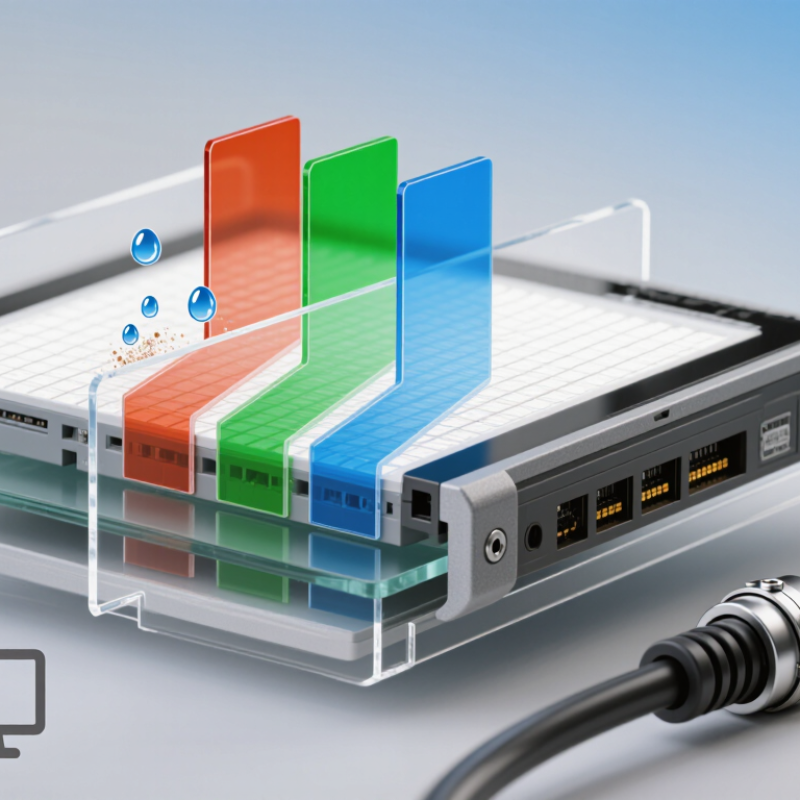
The display itself uses liquid crystals between glass substrates. A backlight produces illumination, while electrodes control each pixel’s light transmission. Color filters create red, green, and blue subpixels. Protective seals, gaskets, and a reinforced front surface help the complete unit meet its stated IP level. Small details matter. A poorly sealed cable entry can weaken an otherwise strong enclosure.

The market context is substantial. Fortune Business Insights reported strong growth in the global LCD display market in its 2024 industry analysis, driven by automotive, industrial, medical, and consumer applications. Omdia’s display demand research also highlights continued investment in larger, higher-resolution, and application-specific screens. These reports describe market direction, not guaranteed performance for every product.

In practice, buyers should verify the full test specification. Check the first IP digit for solids and the second for liquids. Confirm whether the rating applies to the front panel, the rear enclosure, or the entire assembly. Also inspect operating temperature, brightness, viewing angle, touch performance, and connector protection. The term can still be vague. A reliable product sheet should identify the test standard, test conditions, and certification evidence. That is where engineering judgment remains necessary.
What Is an IP LCD Display and How Does It Work?

What Is an IP LCD Display?

An IP LCD display is an LCD screen built into a sealed enclosure with a tested Ingress Protection rating. “IP” means Ingress Protection, not Internet Protocol. The first digit measures resistance to solids, while the second measures water protection. Under IEC 60529, IP65 means dust-tight protection and resistance to water jets. IP67 adds temporary protection against immersion.

The LCD itself still works through familiar layers. Thin-film transistors control individual pixels, while LEDs provide the backlight. A front cover, gasket, sealed connector, and bonded touchscreen help prevent dust and moisture from reaching these layers. In a workshop, this can mean a gloved operator cleaning the panel after oil mist or fine particles settle on its surface. Small details matter. A damaged gasket can weaken the entire rating.

Market demand reflects this practical need. Grand View Research’s Industrial Display Market Size, Share and Trends Analysis Report estimated the global market at about USD 5.6 billion in 2023, with growth projected through 2030. However, a higher IP number is not automatically better. IP ratings do not fully describe chemical resistance, condensation, impact strength, or outdoor readability. That assumption is easy to make, and sometimes wrong. Engineers should check test conditions, operating temperature, connector sealing, and cleaning procedures before selecting a display.

How the IP LCD Display Structure Is Designed

An IP LCD display is built around a carefully aligned layered structure. Its foundation is a glass substrate carrying a thin-film transistor matrix. Each transistor controls one subpixel. Red, green, and blue color filters sit above the liquid-crystal layer. Transparent electrodes create an electric field across the panel.

In an in-plane design, the electrodes remain on the same substrate. Their field turns liquid-crystal molecules within the panel plane, rather than pushing them vertically. This design improves viewing stability and color consistency. Two polarizers control light passage. A rear LED backlight, light guide, diffuser, and reflector then produce uniform brightness. A touch layer may be added above the front polarizer.

The structure is precise, but not perfect. Small alignment errors can cause light leakage near the edges. According to Omdia’s 2024 Display Long-Term Demand Forecast, LCD technology still represented more than 80% of global display-area demand in 2023. That scale supports mature manufacturing and wide application coverage. TrendForce’s 2024 panel market reports also showed continuing price changes across LCD categories, making material efficiency important.

Engineers balance electrode spacing, cell thickness, polarizer quality, and backlight power. A wider viewing angle can increase optical complexity. Higher brightness can also raise heat and energy use. These compromises are easy to underestimate. Careful calibration remains essential.

What Is an IP LCD Display and How Does It Work? - How the IP LCD Display Structure Is Designed

Structure or Parameter Typical Material or Value Function in the Display How It Affects Performance
Backlight unit White LED light source, light guide plate, diffuser and prism films Produces and distributes light evenly across the LCD panel Controls brightness uniformity, power consumption and viewing comfort
Rear polarizer Polarizing film, commonly based on stretched polymer material Converts unpolarized backlight into a selected polarization direction Works with the front polarizer to control light transmission and contrast
Thin-film transistor array Glass substrate with one transistor and storage capacitor for each pixel Individually controls the voltage applied to each pixel electrode Determines addressing accuracy, response consistency and image stability
In-plane pixel electrodes Transparent conductive electrodes arranged on the same substrate plane Creates an electric field mainly parallel to the display surface Keeps liquid-crystal molecules within the panel plane, improving viewing-angle behavior
Liquid-crystal layer Twisted or aligned nematic liquid-crystal material in a narrow cell gap Changes the polarization state of light when the applied electric field varies Controls grayscale levels, color intensity and pixel transmission
Color filter array Red, green and blue color-filter subpixels with a black matrix Separates white backlight into red, green and blue components Defines color reproduction, pixel aperture and light leakage control
Common electrode Transparent conductive layer on the color-filter substrate or pixel substrate Provides the reference electrical potential needed for liquid-crystal control Supports stable electro-optical operation and uniform brightness
Alignment layers Special polymer coatings with controlled surface rubbing or alignment treatment Set the initial orientation of liquid-crystal molecules before voltage is applied Influence viewing angle, response behavior, image uniformity and contrast
Cell spacers and seal Microscopic spacers and perimeter sealant Maintains the liquid-crystal cell gap and prevents material leakage Affects optical efficiency, uniformity, durability and manufacturing yield
Front polarizer Polarizing film positioned perpendicular or at a designed angle to the rear polarizer Selects the final polarization state of light leaving the panel Determines black level, contrast and the amount of transmitted light
Cover glass or protective layer Chemically strengthened glass or transparent protective film Protects the optical stack from scratches, impact, moisture and contamination Contributes to durability, touch performance, reflectance and panel thickness
Pixel architecture Each pixel normally contains red, green and blue subpixels Combines independently controlled subpixel intensities to create full-color images Defines resolution, color depth, sharpness and power behavior
Viewing-angle principle Liquid-crystal molecules rotate primarily within the panel plane Reduces major color and contrast shifts when the viewer moves off-axis Provides wider viewing angles than many conventional vertically aligned or twisted structures
Image formation process Electrical signals from the display driver applied row by row and column by column Adjusts the voltage of individual subpixels to modulate light transmission Produces continuous grayscale and color images without each pixel emitting light itself

How Light and Pixels Work Inside an IP LCD

An IP LCD display forms images by controlling light rather than producing light itself. A white backlight sits behind the panel, often using LEDs and a diffuser to spread brightness evenly. Polarizing layers guide this light through the display. Liquid crystals then twist or relax when an electric field changes their alignment.

Each pixel contains red, green, and blue sub-pixels. A thin-film transistor controls each sub-pixel with a precise voltage. That voltage changes how much light passes through the liquid crystal layer. Stronger or weaker transmission creates different shades. When the three sub-pixels combine, the eye sees one colored pixel. Tiny structures do this millions of times across the screen.

In practical inspection, viewing angle matters. Colors can shift when the screen is viewed from the side. Response time also affects moving images, especially in fast scenes. The backlight may look uniform during normal use, yet small bright patches can appear in dark rooms. This is not always a pixel fault. Dust, pressure, assembly tolerance, or uneven diffuser layers may be involved. The design is clever, but not perfect. LCD performance also depends on temperature, panel calibration, and surrounding light. A bright room can hide weak black levels, while a dark room reveals them immediately.

How an IP LCD Display Produces Images

An IP LCD display is an LCD screen that receives image data through an Internet Protocol connection. The term can vary by industry, so specifications should be checked carefully. In practical systems, a network controller accepts digital content, decodes it, and sends pixel instructions to the display driver.

The image begins with a backlight behind the LCD panel. Usually, LEDs provide steady white illumination. Light passes through a polarizing layer and liquid-crystal cells. Each pixel contains red, green, and blue subpixels. Thin-film transistors adjust electrical voltage for each subpixel. This voltage changes the crystals’ alignment and controls how much light passes through.

Small voltage changes create different brightness levels. Combining three subpixels produces colors, such as warm orange or deep blue. The controller refreshes these values many times each second, making moving images appear continuous. A timing circuit coordinates rows and columns with precise pulses. Otherwise, the picture may show flicker, tearing, or uneven brightness.

Network delivery adds another stage. Compression, latency, and signal errors can affect the displayed result before the panel even changes. A stable connection helps, but it cannot correct poor calibration. I have found that viewing angle, ambient light, and backlight aging also influence perceived image quality. The screen may be technically accurate yet still look disappointing in a bright room.

Key Features and Common Applications of IP LCD Displays

What Is an IP LCD Display and How Does It Work?

An IP LCD display is a liquid-crystal screen protected against dust and water. “IP” means Ingress Protection, not Internet Protocol. The first digit measures solids protection, while the second measures moisture resistance. Under IEC 60529, an IP65 enclosure is dust-tight and resists water jets. An IP67 enclosure also supports temporary immersion, usually up to one metre for 30 minutes. Sealed bezels, gaskets, and cable glands create this barrier. Optical bonding can reduce internal reflections and improve touch accuracy. Useful details matter.

Key Features and Common Applications of IP LCD Displays

Outdoor and industrial models often combine high brightness, anti-glare glass, wide-temperature operation, and glove-friendly touch control. A 1,000-to-2,500-nit panel is common where sunlight hits the screen directly. MarketsandMarkets estimates the industrial display market could reach about 8.8 billion US dollars by 2028, growing near 9% annually from 2023. Its research links demand to factory automation, transport systems, and rugged human-machine interfaces. These displays appear on production lines, self-service terminals, vehicle equipment, marine consoles, and outdoor monitoring stations. However, an IP rating does not guarantee impact resistance, chemical resistance, or long-term sunlight stability. That assumption is incomplete. Engineers should verify the full test method, operating temperature, touch performance, and maintenance conditions before selection. A display may survive rain yet fail because heat builds behind its sealed enclosure. Testing under real installation conditions remains essential.

What Is an IPS LCD Display and How Does It Work?

An IPS LCD uses liquid-crystal molecules that remain parallel to the display plane and rotate in place when voltage is applied. A TFT backplane controls each pixel, while polarizers, a backlight, and color filters produce the final image. IPS technology is known for wide viewing angles, stable colors, and consistent image quality.

The chart shows typical diagonal-size ranges commonly found in IPS LCD applications. Smartphones and tablets prioritize compact, high-density panels; laptops and monitors use larger panels for productivity; automotive displays are sized according to dashboard layout and viewing distance. Actual specifications vary by product and design requirements.

Recycle

Request a Quote

Fill out the form below and one of our specialists will contact you to discuss your questions and needs.

Start your sustainable waste service today