
Blog

Top Pharma Filling Machine Manufacturers Worldwide?

Pharma Filling Machine technology sits at the center of sterile drug production, where accuracy, containment, and repeatability directly influence patient safety. Injectable products require controlled dosing, cleanable surfaces, and reliable integration with inspection and capping systems. Grand View Research’s pharmaceutical packaging industry analysis highlights continued growth in automated packaging, driven by biologics, injectable therapies, and stricter quality expectations. The market is expanding. Yet growth alone does not identify the best equipment supplier.

This guide examines leading Pharma Filling Machine manufacturers, including Syntegon, IMA, Bausch+Ströbel, Marchesini Group, and OPTIMA. Their strengths differ. Some focus on high-speed vial lines. Others specialize in flexible, small-batch systems for clinical manufacturing. ISPE Good Practice guidance emphasizes risk-based design, contamination control, validation, and data integrity across pharmaceutical equipment projects. These principles matter more than impressive brochure speeds. A machine filling 600 containers per minute still requires stable accuracy, suitable aseptic design, and dependable service support.

Selection should consider filling technology, container formats, batch changeover, isolator compatibility, and regional technical assistance. Reports from PMMI also point to automation, digital monitoring, and labor efficiency as major packaging investment drivers. However, supplier claims need careful verification. Advertised capacity may depend on product viscosity, container geometry, and operating conditions. No ranking is perfect. Factory acceptance tests, validation documents, spare-parts availability, and real customer references provide stronger evidence. This article therefore compares manufacturers through practical performance, engineering capability, compliance readiness, and long-term ownership value. The answer may not be the fastest machine. It may be the most dependable one.
Top Pharma Filling Machine Manufacturers Worldwide?

What Is a Pharmaceutical Filling Machine?

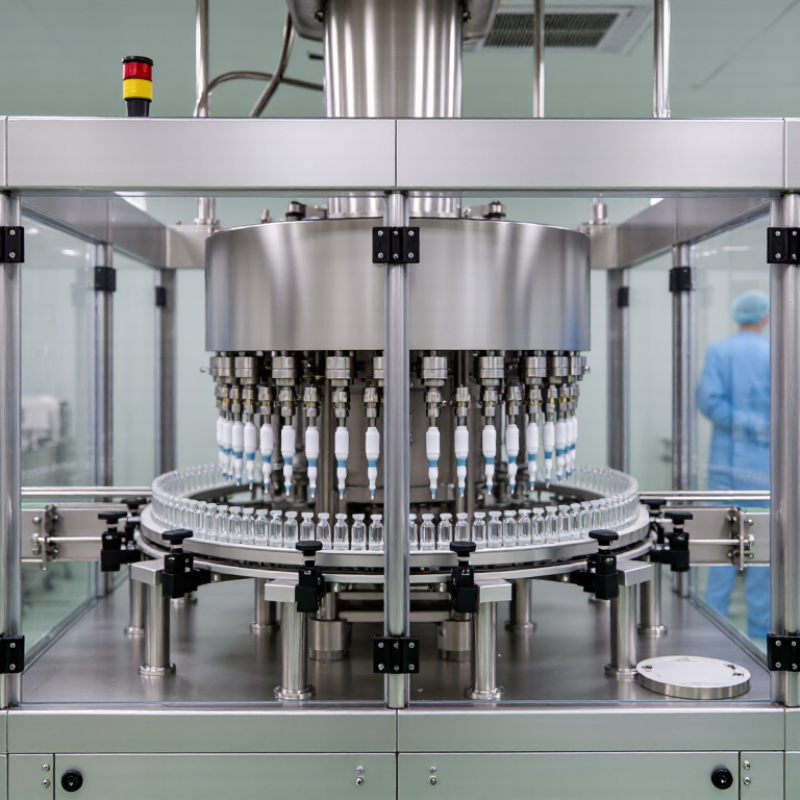
A pharmaceutical filling machine is specialized equipment that measures and dispenses medicines into containers. These may include vials, syringes, ampoules, bottles, or tubes. It usually operates between product preparation and container closing. A piston, peristaltic pump, or pressure system controls the filling volume. Accuracy matters.

The machine must protect product quality during every cycle. For sterile products, controlled air conditions, suitable materials, and carefully designed filling paths are essential. Sensors check container presence, fill levels, and equipment movement. Operators also inspect nozzles, seals, and contact surfaces before production begins. Cleaning, calibration, line clearance, and process validation require documented procedures. Small deviations matter.

Different medicines require different filling methods. Liquids may need gentle handling to reduce foaming. Viscous creams often require heated hoppers or stronger dosing systems. Powders need controlled flow and dust management. A practical selection review should examine container size, dose accuracy, changeover time, and material compatibility. A common mistake is focusing only on speed. Fast output cannot repair unstable dosing. Another detail is easy to miss: the machine must remain serviceable after installation. If access panels are awkward, cleaning may become inconsistent. The equipment may perform well during testing, yet real production can reveal difficult adjustments. That gap deserves honest evaluation.

How Pharmaceutical Filling Machines Work

Top Pharma Filling Machine Manufacturers Worldwide?

How Pharmaceutical Filling Machines Work

Pharmaceutical filling machines transfer measured liquid, powder, or semi-solid products into prepared containers. The process usually begins with container infeed, where bottles or vials move along a controlled conveyor. Sensors check their position before filling starts.

For liquid products, a pump or piston draws material from a hygienic holding tank. Valves then release a measured volume through filling nozzles. Time, pressure, piston movement, and product temperature can affect accuracy. Some systems fill from the bottom upward to reduce foaming. Others use multiple nozzles for higher output.

Powder filling relies on augers, vacuum systems, or controlled dosing cups. The machine may briefly settle the powder before sealing. Small differences in density can still change the final weight. This is where operators need practical judgment, not only software readings.

Clean contact parts are commonly designed for quick removal and inspection. Stainless steel surfaces, smooth welds, and minimal dead spaces support effective cleaning. In my experience, routine checks often reveal issues before alarms appear. A slightly worn seal may cause drips, inconsistent volumes, or contamination risks.

Calibration records, fill-weight checks, and environmental monitoring help confirm reliable performance. Yet no machine removes every source of variation. Product behavior, container shape, and operator setup still matter. That is the part worth reviewing.

Top Pharma Filling Machine Manufacturers Worldwide? - How Pharmaceutical Filling Machines Work
Filling Machine Type How It Works Typical Pharmaceutical Products Typical Fill Range Typical Accuracy Key Advantages Important Considerations
Peristaltic Pump Filler A rotating pump compresses flexible tubing and moves the liquid without direct contact between the product and the pump mechanism. Injectable solutions, ophthalmic liquids, biological products and other sterile liquids. Approximately 0.1–1,000 mL, depending on tubing, pump head and container format. Often within ±1% to ±2% after calibration and process validation. Low product-contact parts, easy tubing replacement and suitability for sterile applications. Tubing wear, pulsation and tubing compatibility must be controlled.
Piston Pump Filler A piston draws a measured volume into a cylinder and then discharges it through a filling nozzle. Syrups, suspensions, creams, gels, lotions and high-viscosity pharmaceutical formulations. Approximately 1–5,000 mL, with the actual range determined by cylinder size. Commonly within ±0.5% to ±1% for stable, well-controlled products. Good volumetric repeatability and effective handling of viscous products. Piston seals and valves require cleaning, inspection and compatibility checks.
Time-Pressure Filler Compressed air or gas applies pressure to a product vessel for a controlled period, forcing liquid through the filling needle. Low-viscosity liquids, sterile solutions and products requiring gentle handling. Approximately 0.5–1,000 mL. Often within ±1% to ±2%, depending on pressure stability and liquid properties. Few moving product-contact components and relatively gentle filling action. Foaming, viscosity changes and pressure fluctuations can affect accuracy.
Auger Powder Filler A rotating screw conveys and meters powder from a hopper into bottles, jars or other containers. Oral powders, dry pharmaceutical ingredients, nutritional powders and inhalation-related powders. Approximately 0.1–2,000 g, depending on powder density and auger configuration. Commonly within ±1% to ±3%; powder flowability strongly affects results. Suitable for free-flowing and cohesive powders with adjustable dosing control. Dust control, electrostatic behavior and powder segregation require attention.
Vacuum Filler A controlled vacuum draws liquid into containers until the liquid reaches a defined level or filling point. Low-viscosity liquids in containers where consistent liquid level is important. Approximately 5–1,000 mL. Typically level-based rather than purely volume-based; performance depends on container uniformity. Provides a visually consistent fill level and can compensate for minor container-volume differences. Not suitable for highly viscous or strongly foaming products without process adaptation.
Aseptic Filling Line Sterilized product, containers and closures are brought together in a controlled environment using validated sterile processing steps. Injectables, ophthalmic products, biologics and other products requiring aseptic presentation. From small vial volumes to larger infusion containers, depending on line design. Usually designed for tight dosing control, with final limits established through validation. Supports sterile manufacturing when combined with validated sterilization and environmental controls. Requires qualified cleanroom systems, environmental monitoring, aseptic procedures and documented validation.
Net-Weight Filler Load cells measure the product mass during filling and stop or adjust the flow at the target weight. Liquids, powders and granular products where mass-based dosing is preferred. Approximately 10 g to several kilograms, depending on equipment configuration. Often within ±0.1% to ±0.5% under stable operating conditions. Compensates for product-density variation and provides direct weight measurement. Vibration, airflow, container movement and scale calibration can influence readings.
Note: Fill ranges, accuracy values and production rates are typical engineering ranges rather than universal specifications. Actual performance depends on formulation viscosity, density, foaming tendency, container geometry, pump configuration, cleanroom conditions and validated operating parameters.

Key Types of Pharmaceutical Filling Machines

Pharmaceutical filling machines are selected by dosage, container design, and production scale. Liquid filling machines handle solutions, suspensions, and sterile preparations. They commonly use piston, peristaltic, or time-pressure systems. Each method affects accuracy, cleaning, and product contact. Accuracy is not enough. Operators must also check viscosity changes during a batch.

Powder filling machines use augers or vacuum systems to measure dry formulations into bottles, vials, or sachets. They need controlled airflow because fine particles can disturb dosing. A small vibration may change the powder’s density. That change can create uneven fills. I have seen equipment specifications look impressive while ignoring powder flow behavior. This is a costly oversight during factory trials.

Aseptic filling machines support sterile products inside controlled environments. They often include isolators, restricted-access barriers, sterilized pathways, and automated monitoring. In contrast, oral liquid fillers may focus more on foaming, dripping, and bottle handling. Ampoule and vial filling lines require precise indexing, stoppering, and crimping. Prefilled syringe machines add plunger placement and device integrity checks. The right machine also supports clean-in-place or validated manual cleaning procedures. Small errors matter. During supplier evaluation, engineers should test real containers and actual formulations, not only water. Fill weight records, line speed, changeover time, and rejection rates provide stronger evidence than brochures. No machine is perfect, and maintenance access is sometimes underestimated.

Leading Pharma Filling Machine Manufacturers Worldwide

Leading Pharma Filling Machine Manufacturers Worldwide

The leading pharma filling machine manufacturers combine precision, cleanability, and documented process control. Their systems support vials, syringes, cartridges, and liquid or powder formulations. IQVIA Institute’s Global Use of Medicines 2024–2028 forecasts worldwide medicine spending will approach 2.3 trillion US dollars by 2028. This growth increases demand for reliable, flexible filling equipment.

Experience matters on the factory floor. A strong manufacturer should provide aseptic design, recipe management, in-process weight checks, and complete data records. Equipment should also support cleaning validation and controlled changeovers. WHO good manufacturing practice guidance emphasizes validated processes, contamination control, and qualified personnel for sterile production. These requirements make technical documentation as important as machine speed. A faster line is not automatically better.

Tips: Compare reject rates, fill-volume accuracy, and changeover time. Ask for validation examples, service response targets, and operator training details. Check whether spare parts remain available for ten years. Small details matter.

MarketsandMarkets and other industry reports continue to identify automation, serialization, and flexible production as major pharmaceutical manufacturing trends. Still, market reports can simplify real factory conditions. A machine performing well in a demonstration may struggle with foaming liquids, fragile containers, or frequent batch changes. Buyers should test actual products under realistic operating conditions. That step is often missed.

How to Select the Right Pharmaceutical Filling Machine

Selecting the right pharmaceutical filling machine requires more than comparing output speeds. Start with the product itself: liquid viscosity, foaming behavior, container size, and required fill accuracy. A machine for thin solutions may perform poorly with creams or suspensions. Check whether the filling system supports single-use parts, gentle product handling, and reliable cleaning procedures.

Tips: Ask for documented accuracy data, factory test records, and validation support. Review the machine’s contact materials carefully. Stainless steel grade, seal quality, and surface finish affect long-term hygiene. Also examine changeover time. A complicated adjustment can create delays and operator errors. Short trials matter.

Experienced manufacturers should explain their testing methods, maintenance plan, and spare-part availability. Request evidence from comparable pharmaceutical applications, not only sales claims. Inspect the control interface during a demonstration. Operators should understand alarms without guessing. That detail is easy to overlook. A perfect specification on paper may still fail during real production, especially when containers vary slightly. Ask how the machine handles interruptions, rejected units, and batch records. Consider installation space, utilities, operator training, and future capacity before choosing. The lowest purchase price can become expensive when support is slow or replacement parts are difficult to obtain.

Recycle

Request a Quote

Fill out the form below and one of our specialists will contact you to discuss your questions and needs.

Start your sustainable waste service today